Design Diary Part 4: To Rot Or Not
over 2 years ago
– Tue, Apr 02, 2024 at 12:34:08 AM
Today in the latest entry of Rob Heinsoo's Design Diary, we're here to talk about Rot! Corruption! (& Trickery!)
Our core Armello game skips the cards that accumulate Rot and trigger Corruption. How did we reach that decision?
When we began developing the rules we started with a full set of Rot cards and rules for corrupted Heroes. We played that way for a couple years. (Remember, the board game has been in development for 5 years!)
Then we reviewed the size and complexity of the game and started thinking that there was enough material to develop the mechanics into a separate expansion and in doing so, give it the attention it deserved with more development and playtesting time.
We really wanted to concentrate on making the core game as robust and playable as possible. Whilst Rot and Corruption are certainly important features of the digital experince, they add another level of complexity and management that might not suit all players, there already being enough baked-in rules exceptions and paths to victory. It was decided that for the benefit of the total experience this additional level of gameplay could be optional for a player who wants to go deeper.
Therefore the decison was made that such features should be developed and playtested separately and if the interest is there, crafted into a worthy expansion to the game that players could decide to include, or not.
I proposed that we save Rot and Corruption as a hugely exciting expansion idea that would let us focus on the Rot cards to make them the star of the show. Our Developer, Jay Schneider, loved the idea because he had been trying to cut down on the huge number of cards and believed that the material we were dealing with justified separating the expanded rules and components into an optional addition to the game.
When we handle Rot, we’ll be introducing a slew of new Item, Treasure and Spell cards, new Quests, and somewhat different ways to play. There are a couple different ways this could be handled in a deckbuilder (well, a couple we’re thinking about seriously), and we decided to set things up so that Corrupted Heroes could be fully realized and fleshed out.
Visually, I’d love to do new Corrupt Hero playmats, and that might lead to slightly different abilities for each Hero when corrupt. Similarly, I’d love to try something big where entire regions become Corrupted by Late Declarations by the King. Or perhaps a region will be lost to the Rot the first time each Hero becomes Corrupt.
There’s also the possibility that alternate versions of a few cards will show up in the Rot expansion. You’ll choose to play with or without the Rot rules, and that will determine which set of cards you’ll use. That may turn out not to be necessary, but it's a simple trick I won’t feel guilty about if it helps everything work smoothly with and without Corruption.
What About Trickery?
The Trickery cards ended up in the same expansion-basket when we settled on versions of the cards that played a bit differently than anything else. The level of vehement sabotage the Trickery cards were applying to opponents in our playtests felt like the kind of damage that would fit perfectly in an expansion dedicated to experimenting with Corruption and betrayal.
So, it’s most likely that the Trickery cards will show up in the same expansion as the full suite of Rot cards and Corruption mechanics. When they’re cards like the Emissary, they provide an entertaining path to screwing with opponents that doesn’t require you to move entirely to the dark side. When they’re cards like Biff’s Black Market, they’re simply entertaining!
Introducing: Caramello Armello!
over 2 years ago
– Sun, Mar 31, 2024 at 07:08:30 PM
Happy Easter from all of us behind Armello: The Board Game!
Here in Australia, we all love Cadbury's Caramello Koalas. This year, you can add something extra special to your Easter baskets with Cadbury's new Caramello Armellos! Try Sana with a refreshing spearmint flavor, or Amber with a sweet hint of pineapple! What flavors do you think Thane and Mercurio should be? 🤔
In addition to Easter, it's also... April Fool's Day! 🥳 Now, we're going to go eat some real Caramellos...
Tomorrow, Designer Rob Heinsoo talks about Rot, Corruption and Trickery!
A Wild Guppy Appears 🐸
over 2 years ago
– Sat, Mar 30, 2024 at 10:02:34 AM
Hi everyone,
Happy Easter weekend! We're excited to be kicking off the weekend with a new stretch goal unlocked!
As we surpassed $400,000 in funding (also... wow!!!) you added new Amulet cards to the game! This new mechanic will be added to both the Standard and Collector's Editions of the game. The Amulets are currently in development, so stay tuned for more info on them!
We've also unveiled our next—and final—stretch goal! At $500,000, every copy of the Collector's Edition will come with a miniature of everyone's favorite frog squire: Guppy! There will also be a new mechanic created to add Guppy to the game—not as a playable Hero, but to lend your Hero a helping hand. This mechanic will be optional so you can play with or without Guppy.
As we enter the last week of the Kickstarter, please consider sharing the campaign on your social media, with your gaming group, on your Discord server, or with anyone you think might love a board game that features adorably cutthroat animal fighters. Word of mouth helps so much and the more people who come on board, the more likely we are to unlock Guppy!
Thanks for your support, everyone!
On the matter of maps...
over 2 years ago
– Wed, Mar 27, 2024 at 10:54:34 PM
Greetings! There has been great interest in Armello: The Board Game Designer, Rob Heinsoo's design notes so we asked him for more! In this update Rob gives us an insight into the thought process behind the layout of the map boards.
Making Maps for Armello
People have been wondering if we could make modular maps for Armello. It turns out to be an interesting question.
I’m going to start by touching on a few things about the Armello map boards that make a fully modular approach both challenging and (probably) undesirable.
Quest Necessities
Instead of sending heroes to specific quest locations like the digital game, our quests send heroes to a specific terrain type in a specified region. If you’re headed to a Forest in the South East (SE), either Forest will do.
Consequently, each region must contain at least one example of each of the seven terrain types. The four terrain types with the most impact—Dungeons, Settlements, Swamps, and Stone Circles—show up once in each region on the two maps we’ve done so far. Other terrain may show up more than once in each region.
Fair Set-Up
Our two maps aim to create somewhat different play dynamics and most importantly, fair starting conditions. Both those goals become harder to reach when pieces of the map are replaced with modular bits or add-ons. Let’s look at arrangements for a couple of terrain types.
Map A Map B
Map B
Settlements: Our first two maps are defined by the distance between the Clan Grounds and the Settlement. Map A has two spaces between the spots where heroes start play and the first Settlement. Map B has three spaces. Player Heroes setting up in any region have the same distance to travel to claim their first Settlement. The 3-space map makes it more likely that a Hero will skip claiming a Settlement to focus on moving towards their Quest destination.
That’s a choice that each player gets to make, and their choices are roughly equal. A map that makes one or two starting positions nearer, or further, from the hero’s first chance to claim a Settlement introduces the type of early-game bias we’re aiming to avoid.
I note that it might be OK for starting positions and distances to get weird later in a game, especially since slain Heroes come back in random clan grounds, instead of being able to choose the most advantageous location.
Mountains: Another issue with randomized terrain surfaces is when Mountains bump up against each other. One of our maps puts a couple Mountains together, justifying the move by putting Settlements and Stone Circles in close proximity. But as a rule, when Mountains cluster, most Heroes have difficulty moving through the cluster and a piece of the board gets ignored. That’s not usually great for the game—it’s usually more fun if there are multiple sensible routes. An add-on or modular approach would need to try to avoid Mountain clusters if it was intended to be something that people would play with often.
Other terrain: There are somewhat similar issues with Dungeons and Stone Circles, but not quite as significant, so let’s skip on to the physical bits.
The Physicalities
Part of the reason the maps look so good is that the shadows are right! The art reads in one direction. The base of the forest is South and down, the trees and mountains and houses go up. If we ever try to make a truly modular game piece, it’s going to look different than the rest of the board. I know I’m not excited about telling Greg & Dann of Quillsilver that they need to find a way to make pieces turn in all directions! Game designers are justly famous for trampling on aesthetics with gameplay desires, but so far there aren’t many gains from making map bits that read in all directions.
Stay tuned for Rob's next update where he'll be talking all about ROT!
Kickstarter besties and beyond.
over 2 years ago
– Sun, Mar 24, 2024 at 01:26:12 AM
Hello, Armelians!
We hope you are having a great weekend full of good games and great friends!
Since it's the weekend we are going to take a little break from Armello: The Board Game and talk about some other awesome stuff like friends and... other games. A wonderful thing about working in the game industry is that most people you know, or meet are gamers! We are pretty lucky to work somewhere where gaming is your work and your hobby - not a bad way to roll.
We enjoy supporting other game companies and are thankful for the encouragement our peers give us. We are super proud that over the years we have backed nearly 200 Kickstarter projects and have helped 171 other games get funded! In fact, during the course of this campaign we have already backed three other games! Galactic Cruise, Craft and Conquor: Medieval and The Red Dragon Inn - Adventure is Nigh!
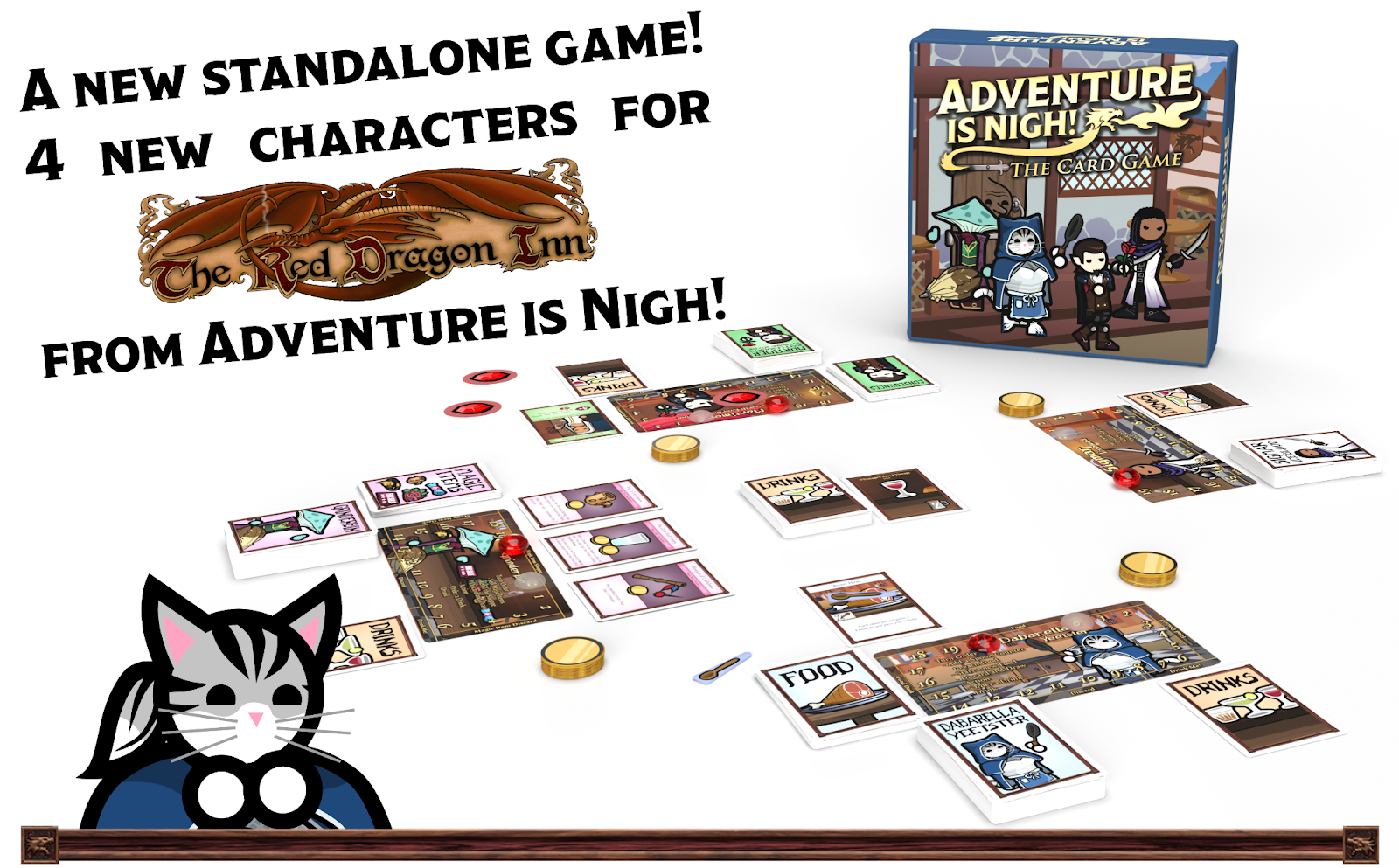
Speaking of Red Dragon Inn, the folks at SlugFest Games have been long time supporters of our products and helped us in many ways over the years. We'd like to take a moment to share a project from our buddies. They've teamed up with the folks from Second Wind to create The Red Dragon Inn - Adventure is Nigh; a new RDI starter set featuring the iconic characters of the D&D live play series!
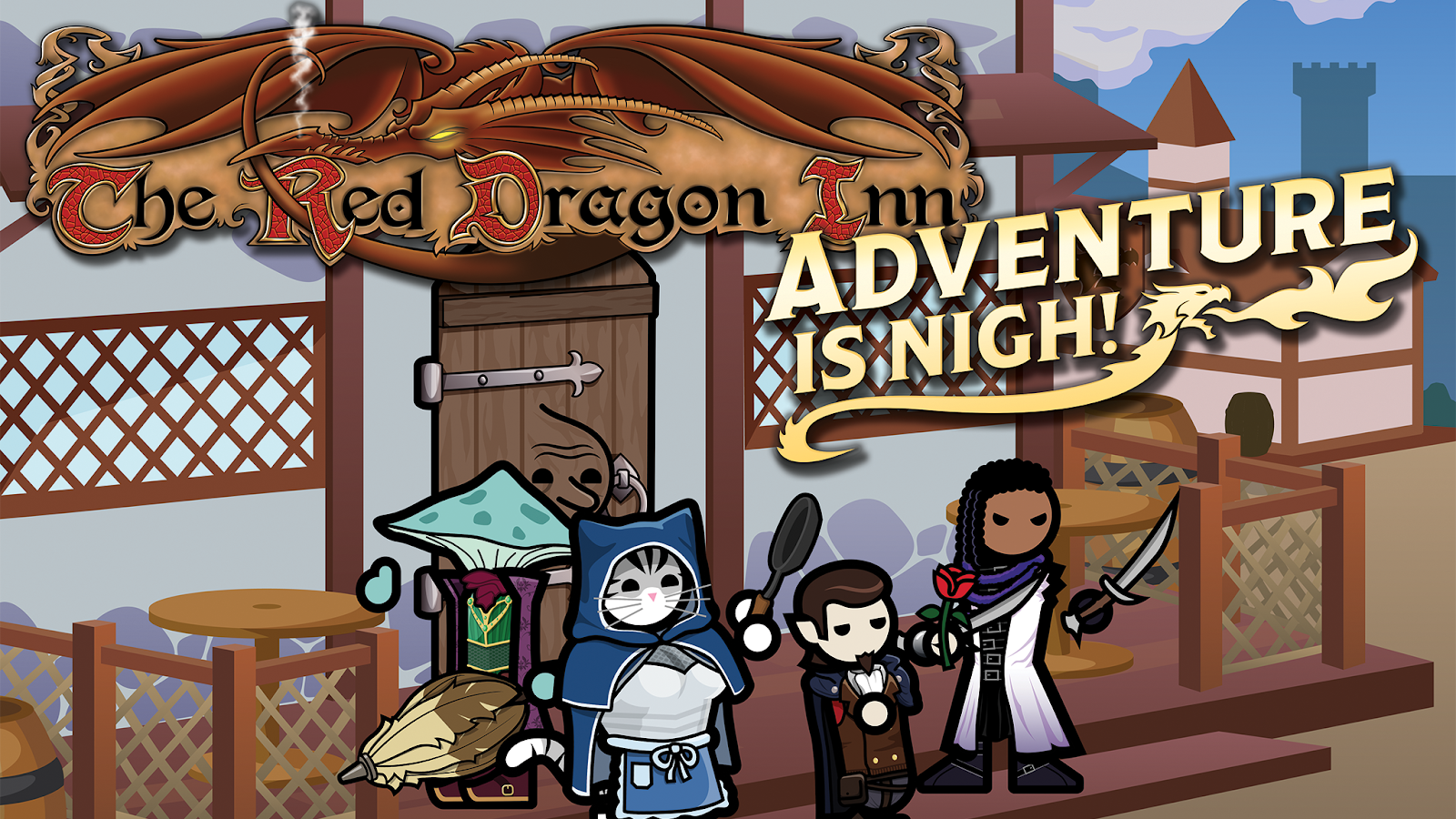
You probably know the premise already, but here goes - after another wild adventure it’s time you kicked back with your buddies for a party at your favorite nightclub. Brawl, gamble and drink your way through the night as a unique character with their own deck, traits and mechanics. The last adventurer standing wins! Best of all, since this starter set is fully compatible with The Red Dragon Inn, you can mix and match characters to your heart's content to add players and variety to your games!
Want to learn more about Adventure is Nigh? You can watch a recap of seasons 1 and 2 here on YouTube!
SlugFest Games has also just declared all stretch goals unlocked, and that means all backers will get to choose between a set with the Adventure is Nigh animation-style art, or one with Red Dragon Inn-style art (and if they want, backers can pledge for both!). Here's a sample of the RDI-style art;
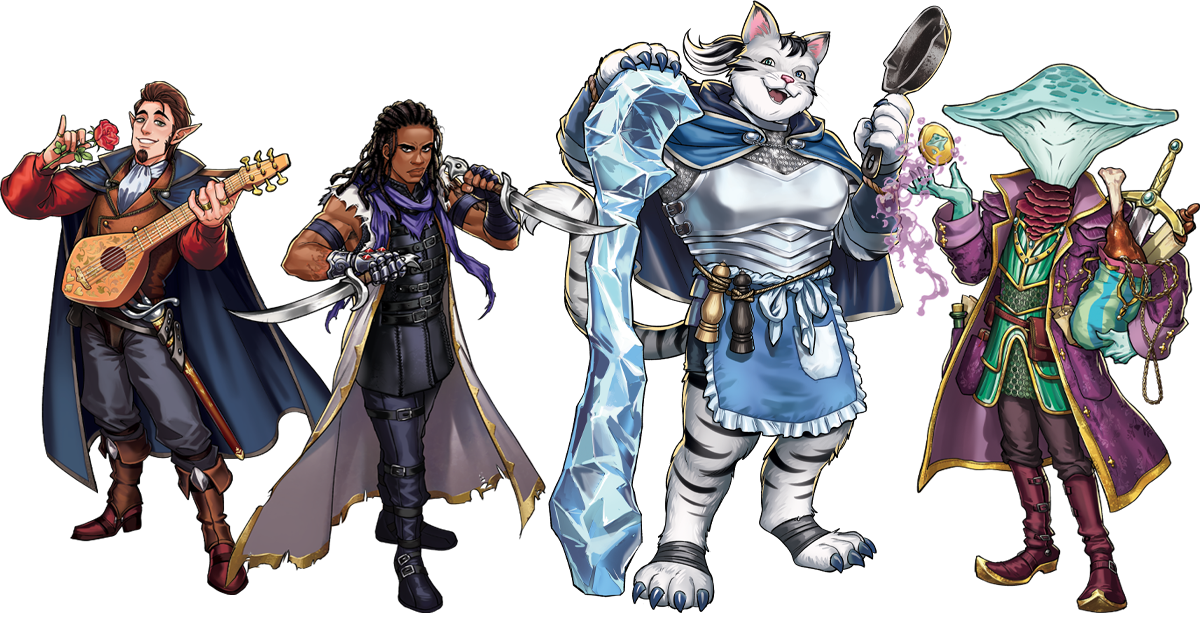
The entertaining match between the fantasy adventure humor of Adventure is Nigh and The Red Dragon Inn can't be denied. If you like what you see here, give their campaign a look!
Thanks for indulging us in supporting other projects. Next week we will be back with more Armello including some more editions to Designer Rob Heinsoo's Design Diary.